



What to Do If You Get an Unnecessary or Incorrect 1099
What to Do If You Get an Unnecessary or Incorrect 1099 As the new year begins, you’re going to start getting various tax forms, including the 1099. While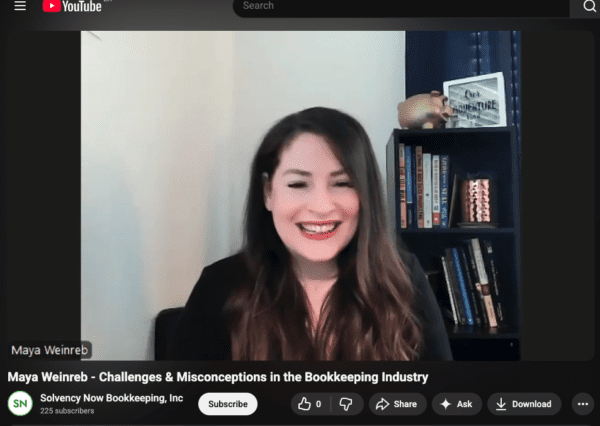
Podcast time! Challenges & Misconceptions in the Bookkeeping Industry
Podcast time! Challenges & Misconceptions in the Bookkeeping Industry In this episode, host Andrew Lassise sits down with Solvency Now Founder and CEO Maya Weinreb to discuss her journey from
Podcast time! 1099 Season Nightmares With Maya Weinreb!
In this eye-opening episode, Tax Rep Network Founder Eric Green sits down with his own bookkeeper, Maya Weinreb from Solvency Now to break down what most business owners don’t understand
Bet you didn’t claim this deduction… 👀
Most business owners miss it and it’s not because they don’t deserve it, but because their books are a mess. Every year, entrepreneurs hand the IRS free money just by
Great News! We’re Ready to Help with Your Catch-Up Projects!
The Wait is Over – We’re Ready to Help with Your Catch-Up Projects! We’ve got some exciting news to share! Our team has grown, and our top notch bookkeepers are ready
Drowning in Receipts? Get Pro Bookkeeping for Only $300/Month!
At Solvency Now Bookkeeping, we understand that small business owners like you have a lot on your plate. Managing your finances should be the least of your worries. That’s why
Here’s how you can Save Money & Scale Faster with Expert Bookkeeping
As your business grows, so does the complexity of managing your finances. Keeping accurate records, ensuring compliance, and making informed financial decisions require more than just basic bookkeeping. That’s why
Understanding the CARES Act: What It Means for Your Business
The Coronavirus Aid, Relief, and Economic Security (CARES) Act is one of the most significant pieces of legislation in recent U.S. history. Enacted in March 2020, it provided unprecedented financial
Reasonable compensation – what is it?
Reasonable Compensation for Companies With S Corporation Status To dissuade business owners from hiding wages behind distributions to avoid paying payroll taxes, the IRS requires S Corporation owners to pay